What Is Spiritual Discernment? A Guide to Recognizing God’s Truth
Introduction
In today’s world, we are surrounded by voices competing for our attention. News outlets, social media, podcasts, books, influencers, and even religious leaders all claim to offer truth, wisdom, and guidance. Yet not every message is trustworthy, and not every spiritual teaching comes from God. This is why spiritual discernment is one of the most important qualities a Christian can develop and nurture.
Discernment Defined
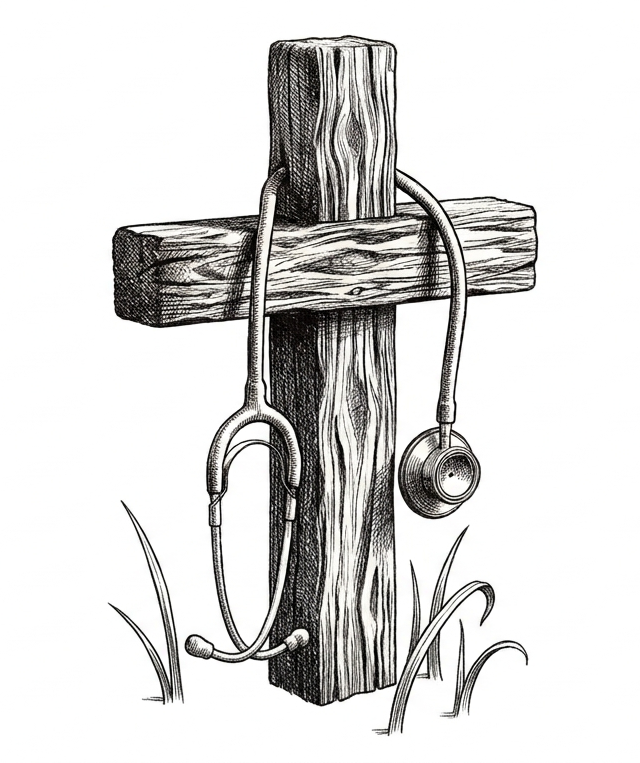
In its broadest sense, we define discernment as the ability to recognize, evaluate, and distinguish among different possibilities in order to make wise decisions. All of us actually do it every day. We are constantly making decisions on what is correct and incorrect, what is right and what is wrong. For instance, a physician carefully studies symptoms before making a diagnosis. A judge weighs evidence before reaching a verdict. An experienced mechanic listens to an engine and recognizes a problem that others cannot hear. In each case, discernment requires knowledge, wisdom, experience, and careful judgment. These examples illustrate ordinary worldly discernment. Though they are certainly valuable, they only hint at a much greater kind of discernment that Scripture calls believers to develop.
But What is Spiritual Discernment?
Is spiritual discernment simply common sense? Is it intuition? Or is it something much deeper? Spiritual discernment is the God-given ability to distinguish truth from error, good from evil, and God’s voice from every counterfeit. It is the ability to evaluate people, teachings, experiences, and decisions through the lens of Scripture and under the guidance of the Holy Spirit.
Understanding and practicing discernment is important for every believer. Without it, Christians are vulnerable to false doctrine, spiritual deception, moral compromise, and worldly philosophies that subtly pull them away from Christ. With it, believers grow in wisdom, deepen their faith, and learn to follow God’s will with confidence.
What Does Scripture Say About Spiritual Discernment?
In the Bible, we find several verses and passages regarding discernment. The Apostle John warned believers:
“Beloved, do not believe every spirit, but test the spirits to see whether they are from God…” (1 John 4:1, ESV)
Here, John states something that many Christians overlook today: not every spiritual message comes from God. We cannot be swayed by charismatic sermons or what is currently popular. Unfortunately, some teachings deliberately distort biblical truths. Those who preach the Prosperity Gospel is a perfect example (Coming Soon – An article concerning False Prophets). And so, Christians are commanded to test every claim against what is found in the Bible.
In his epistle to the Philippians, the Apostle Paul prayed:
“…that your love may abound more and more, with knowledge and all discernment.” (Philippians 1:9, ESV)
Notice that Paul connects discernment with both love and knowledge. Genuine discernment is never harsh, suspicious, or self-righteous. Rather, it grows out of a heart transformed by Christ and a mind shaped by God’s truth.
In the Book of Hebrews, we find another important insight:
“But solid food is for the mature, for those who have their powers of discernment trained by constant practice to distinguish good from evil.” (Hebrews 5:14, ESV)
Spiritual discernment is not an automatic gift possessed only by a few Christians. It develops through spiritual maturation, which, as the verse says, requires constant practice. Naturally, a new believer will be less spiritually mature and will not have developed discernment to the degree someone who has been a Christian for decades.
Truth
The bottom line is truth, and the need to seek it out. Our culture often treats truth as something personal or relative, rather than objective. Many people believe that what is spiritually true for one person may not be true for another. Even within the church, some teachers present conflicting interpretations of Scripture, while others mix biblical teaching with human philosophy or cultural trends. Yet, there is only one truth, and it is Jesus, as it is expressed in the gospel (See Understanding the Gospel Here.)
Jesus said to him, “I am the way, and the truth, and the life. No one comes to the Father except through me. (John 14:6, ESV).
Numerous other verses address the need for discernment. Jesus warned that false prophets would arise and deceive many (Matthew 24:11). Years later Paul likewise warned the Ephesian elders that false teachers would arise even from within the church (Acts 20:29–30). Peter even devoted an entire chapter of his second letter to exposing false teachers and their destructive influence (2 Peter 2). These warnings remain just as relevant today as they were two thousand years ago.
A Life Centered on CHRIST
A life centered on Christ is key. Today’s discerning Christian grows and strengthens faith through discernment:
- By reading and studying Scripture;
- By prayer as they seek wisdom from God, who “gives generously to all without reproach” (James 1:5, ESV);
- By practicing faithful obedience to God’s word;
- By the Holy Spirit who leads believers into truth and helps them apply God’s Word to everyday life.
As these practices become habits, Christians become increasingly able to recognize teachings and influences that either draw them closer to Christ or lead them away from Him. Just as a professional athlete constantly practices to improve his or her game, so too consistent Bible study, prayer, and other spiritual disciplines will lead to a mature capacity for discernment. The very name of this blog site was deliberately chosen to be “Today’s Discerning Christian” because the articles and devotionals contained within it are directly aimed at helping with daily discernment. What have you discerned today?